
Last Updated: November 5, 2026
Quick Summary
Remote architecture staffing means hiring architectural support staff, such as drafters, designers or administrative assistants, who work from outside your office while your firm keeps control of the projects. The staffing provider typically handles payroll, benefits and oversight.
- The process has four stages: define the role, screen candidates, review and offer, then onboard.
- Define the role first, including the software it needs, such as AutoCAD or Revit.
- Set access, drawing standards and a single reviewer before the first project file arrives.
- Schedule a fixed daily overlap window for questions and redlines.
- Judge remote hires by total output, since a low hourly rate means little if rework consumes savings.
Table of Contents
- What Remote Architecture Staffing Is and How It Works
- Remote Staff Onboarding Checklist for Architecture Firms
- Remote Architecture Collaboration Tools and Team Management
- Frequently Asked Questions
What Remote Architecture Staffing Is and How It Works
Remote architecture staffing means hiring architectural support staff who work from outside your office, usually from another country, while your firm keeps control of the projects. A remote drafter, designer or administrative assistant handles defined tasks through shared files and video calls, and the staffing provider typically manages payroll, benefits and oversight. To see a remote CAD drafter or BIM modeler option with its scope, visit Hire a Remote CAD Drafter or BIM Modeler.
The process generally runs in four stages. First, you define the role and the software it needs, such as AutoCAD or Revit. Second, the provider screens candidates against that skill set. Third, your firm reviews shortlisted candidates and makes an offer. Fourth, the new hire is onboarded into your file system and review process.
Pricing depends on the role, hours and scope, so request a current quote from Drafting Helpers for exact figures. A low hourly rate means little if rework consumes the savings, so judge the total output against your standards.
The article outlines four stages for hiring remote architecture staff, which can be summarised as follows.
| Stage | What happens | Who leads it |
|---|---|---|
| Define the role | Set the role and the software it needs, such as AutoCAD or Revit | Your firm |
| Screen candidates | Match candidates against the required skill set | Staffing provider |
| Review and offer | Review shortlisted candidates and make an offer | Your firm |
| Onboard | Bring the new hire into your file system and review process | Your firm |
Remote Staff Onboarding Checklist for Architecture Firms
Onboarding decides whether a remote hire becomes productive or becomes a source of rework. Set access, standards and review rules before the first project file arrives.
- Confirm software versions and template files match your office standards
- Grant file-server or cloud access limited to the projects assigned
- Share your drawing standards, naming conventions and title block rules
- Assign a single reviewer who checks the first deliverables closely
- Schedule a fixed daily overlap window for questions and redlines
Most firms find that the first two weeks need the most attention, because that is when small misunderstandings about standards multiply.
Remote Architecture Collaboration Tools and Team Management
Remote architecture teams rely on shared file platforms, version-controlled models and regular video reviews. Keep one source of truth for each drawing set, and record redlines in the same location so no one works from an outdated sheet. A short weekly check-in covering open tasks, blockers and upcoming deadlines keeps distributed work on schedule.
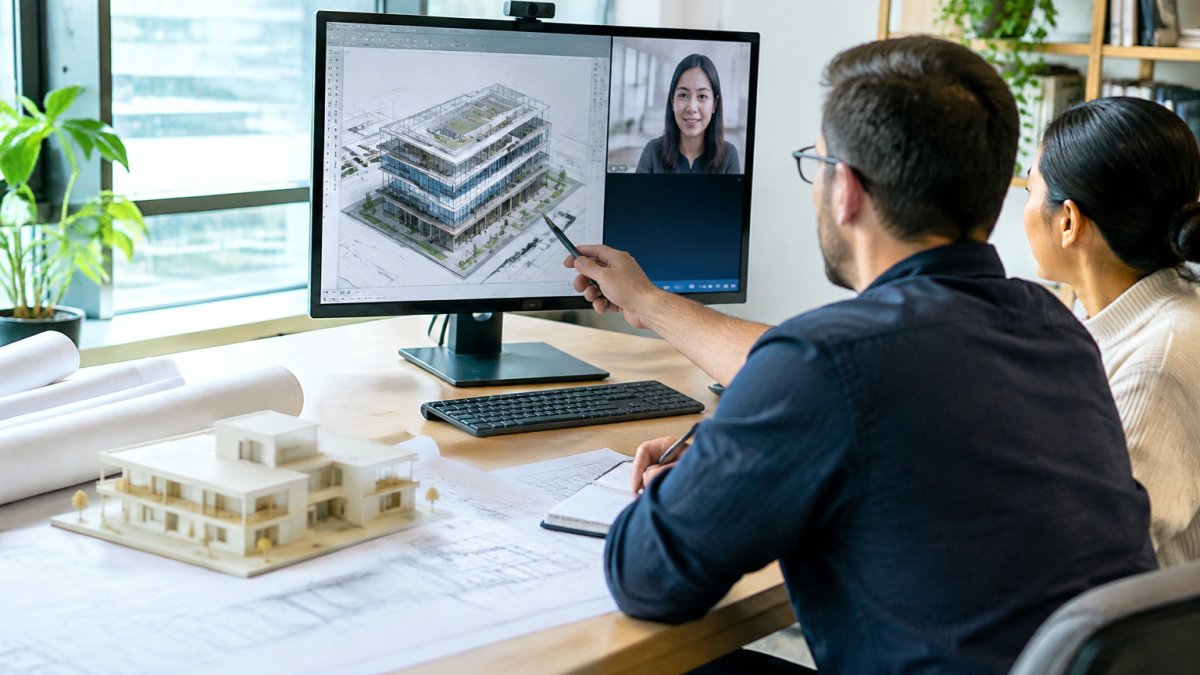
Remote staff can be managed through the same performance reviews and project milestones you use for in-office teams. The difference is that expectations must be written down, since informal office communication does not carry over.
Frequently Asked Questions
What is remote architecture staffing?
Remote architecture staffing is a model in which an architecture firm brings in drafters, designers, or administrative staff who work from another location, usually abroad, while the firm keeps control of project direction and client relationships. Typical tasks include AutoCAD and Revit drafting, construction documentation, redlining, and BIM support. Pricing depends on role, volume, and delivery requirements, so firms should request a current quote from Drafting Helpers for exact figures.
What tasks can remote architectural staff handle?
Remote staff commonly handle drafting, construction documentation, design development support, 3D modeling, and redline revisions. Tasks that require site visits, stamping or licensed sign-off, or direct client meetings usually stay with the firm's licensed architects. Firms should confirm which tasks a given role can cover before assigning work, and check their state's licensure rules on who may seal drawings.
How do remote architecture teams collaborate on drawings and project files?
Remote teams typically share files through cloud storage, work in Revit or AutoCAD with shared models or worksharing, and hold regular video check-ins. Clear file naming standards, version control, and a defined handoff process reduce errors. Set these rules at the start so remote drafters and in-office staff work from the same current drawings.
